Showing posts with label renovate. Show all posts

Monday

Why Would a Decorator Hire A Stager?

Architectural design is a key part of any property for sale. Just as people choose clothing, hair styles and makeup to accentuate their best features, good stagers select and arrange items to accentuate the special features of each property they work on.  Attention might be drawn to the quality, detail, beauty, size, view, or functionality of a design, to name a few. This purpose differs from decorating, which may draw attention instead to the personal belongings or lifestyle of the owner. For this reason, even a nicely decorated home may benefit from the focused involvement of a stager when it is offered for sale.
The placement of this furniture deliberately draws attention to the window, an architectural feature of this room. Notice that plants chosen draw the eye to, but do not block the view of, the window.
The flowers are placed to draw the eye through the lovely archway into to kitchen,  but not to detract attention from the renovated cabinets, backsplash, sink, and lighting.


A Space Transformed - WOW!

The before and after pictures in this example illustrate how decorating and staging can differ. The first photo has a decorative approach, incorporating lively color and special belongings into the decor. Many changes were made to arrive at the new look in the "after" photo.  From a staging perspective, the renovated look would appeal to more buyers because neutral colours are used, complemented by modern fixtures and accessories.
Before
After

Get A Handle On Things

Changes don't need to be expensive to make a noticeable difference. The area around handles and knobs can become worn or dirty, and fixtures themselves can date a property due to the materials and styles used. Simply changing the handles, and cleaning up fingerprints can give cupboards and closets a refreshed look. Changes like these deliver a good return for a small investment.

Before
After

Thing Are Looking Up!

Ceilings can be damaged by a number of causes. Buyers will be wary of damage because water stains could reveal structural problems with the roof, and unsightly cracking means work to repair it. Therefore it is best to address ceiling problems yourself so they are not an issue when selling. Special primer may be required to seal and kill areas if mold has grown. Here are before and after photos that show ceiling improvements from various conditions.

Before: Cracked paint on ceiling tile and a dirty, rusty fan cover.
After: Ceiling sanded, fan cover cleaned, and both repainted.


Before: Ceiling discoloured where cupboards
were removed.
After: Holes filled and ceiling repainted.


Before: Signs of water damage on the ceiling.
The roof was repaired, but this damage
could concern a buyer.
After: Repainted ceiling conceals signs of past water damage.

Tuesday

Curb Appeal Draws Buyers

Curb appeal refers to the way your house looks when you first arrive and view it from the "curb". This first impression is important because buyers draw conclusions from the minute they arrive. Paint is one way to change the exterior of a house, but it is a big investment. To help select colours, Little City Staging uses photo technology to preview how various changes improve the curb appeal of your home. Simple changes can make a huge difference through the use of colour and focal points, resulting in a faster, more profitable sale.
Before: It can be difficult to picture how a change will look.
After: A color change updates the exterior and the focal appeal of the door is improved.
Little City Staging shows in advance how changes could improve your curb appeal. 

Sunday

Counterpoints

Space to work in a kitchen is essential. Buyers also want kitchens that are attractive and up to date. In the one shown, old countertops were replaced with new ones in a dark laminate for a more sophisticated look. A hammered metallic backsplash was added to unify the space, reflect in light, and feature chrome fixtures and appliances. Items were removed and staged to make counter space inviting. This relatively small investment (approx. $1100) makes this kitchen more saleable to reduce time on the market and potential markdowns.

Before
After

Tuesday

A Pane in the Glass

Windows are meant to be clear. However, sometimes the seals break and moisture seeps between the panes, like in the photo. It can look like a steamy buildup, or worse like a rainy day, and the amount of moisture can vary with the seasons. This may be quite noticeable, and will spell "work" to a potential buyer, so it is therefore worth replacing if you plan to sell.

Thursday

Old Furniture May Not Be Vintage

Furniture can really influence the look of a room. Outdated furniture can draw attention to the age of an older home, and a vacant home is difficult for buyers to envision furnished. Empty rooms can also seem stark and uninviting. A quick way to bring modern furniture into a home temporarily is to rent it. Furniture rental companies look after delivery, set up and removal, and the opportunity to rent on a weekly basis makes this choice affordable. You also have the option to purchase the furniture if you like using it.
A living room can receive an updated or more upscale look with rented furniture.
Nice furnishings make vacant rooms more appealing.

Tuesday

Underpainting: It's Like Underwear for Art


This painting involved a technique called underpainting. Some benefits of underpainting are:

  • base colors can peak through the brushstrokes of the upper coat, providing visual interest or enhancement of the top color.
  • colors beneath can create visual shades and highlights in the top color.

Essentially, paint is applied as a ground, before the final product is applied over it.

This often occurs inadvertently when painting walls. Shades of paint on a wall beneath make brush or roller strokes more visible, and may reflect a different color through the topcoat. Unless you want to feature the brushstrokes and the color beneath, as some finishes do, most people use primer or extra coats of paint to make them less visible.
The underpainting in this picture was yellow beneath the green, green beneath the red, and orange beneath the blue.


Switch It Up

Often the light switch is the first thing you reach for when you enter a room. Most rooms have other focal points, and light switches just blend into the background. A bathroom may be one area where you feature a unique switchplate, because the room is small and fixtures are noticeable. For staging, however, remember that the contents of rooms leave when you move. So if the switchplate matches the decor/contents, consider replacing it with one that suits the room itself.

Before: Decor switchplates tend to match the current owners' belongings and taste.
After: A new one was chosen to match fixtures in the bathroom.


Old Lights, New Lights

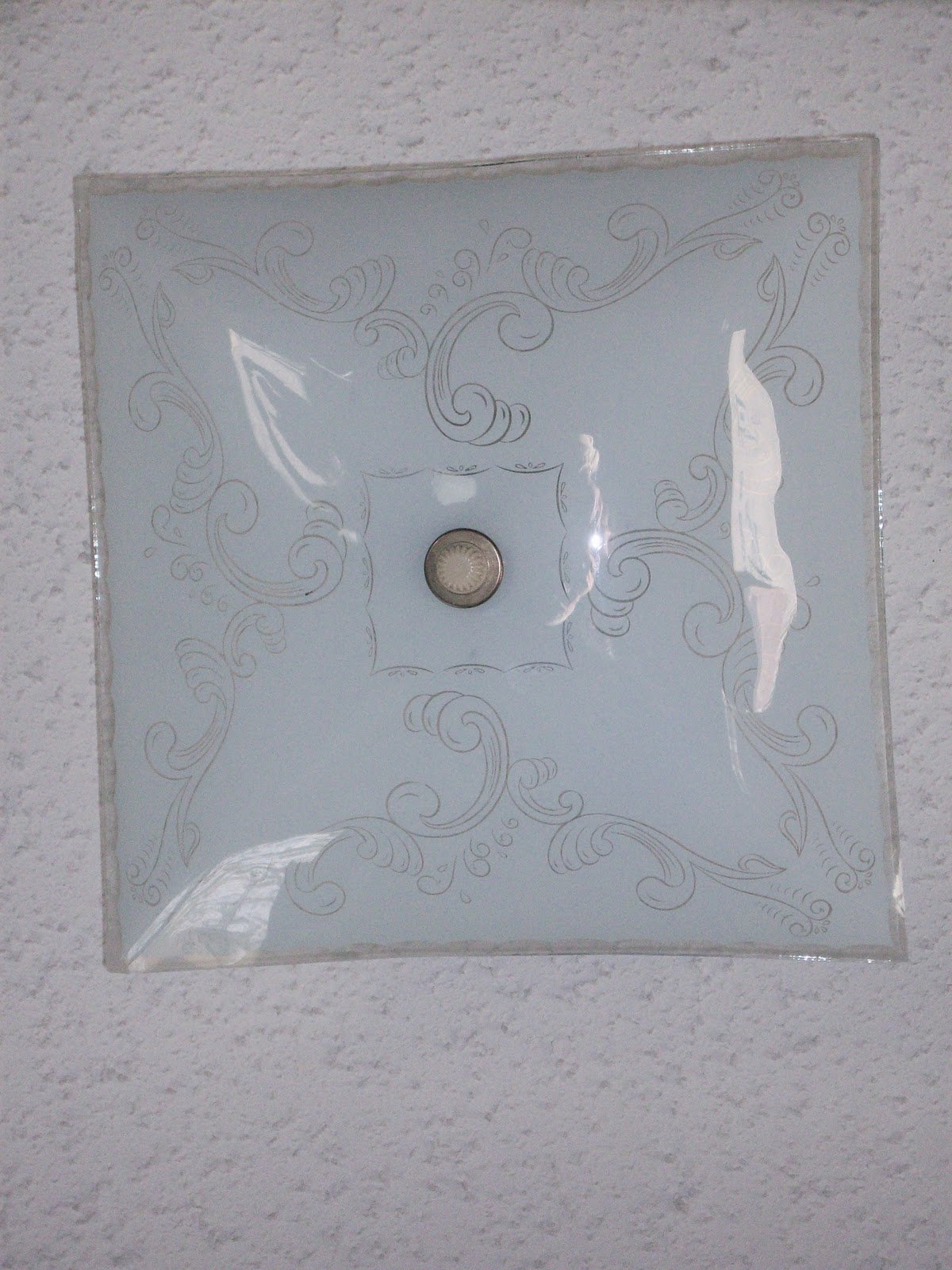
It's easy to overlook light fixtures that we see everyday. However a potential buyer is likely to notice them because they are usually sold with the property. A new light fixture can reduce the ability of insects and dust to accumulate in the glass, and give the room an updated look. Older fixtures, such as the one pictured, are often replaced with affordable flush mount lighting.
Older fixtures tend to swivel, and collect dirt.
A new light updates the room.


Friday

Adore A Door


Sometimes homes aren't built exactly how we'd like, but can be adapted to our needs. For example, a bedroom built near an outside entrance, but with a wall between, could be turned into an office by the addition of a door. You can still return this room to its original use as a bedroom, if the door allows for privacy. In addition, a room can be brightened by adding a door with glass in it to let more light stream through.  This is usually easier than adding another window, and allows more natural light in.
New door added.
After Paint.